Akoya Pearl Rings
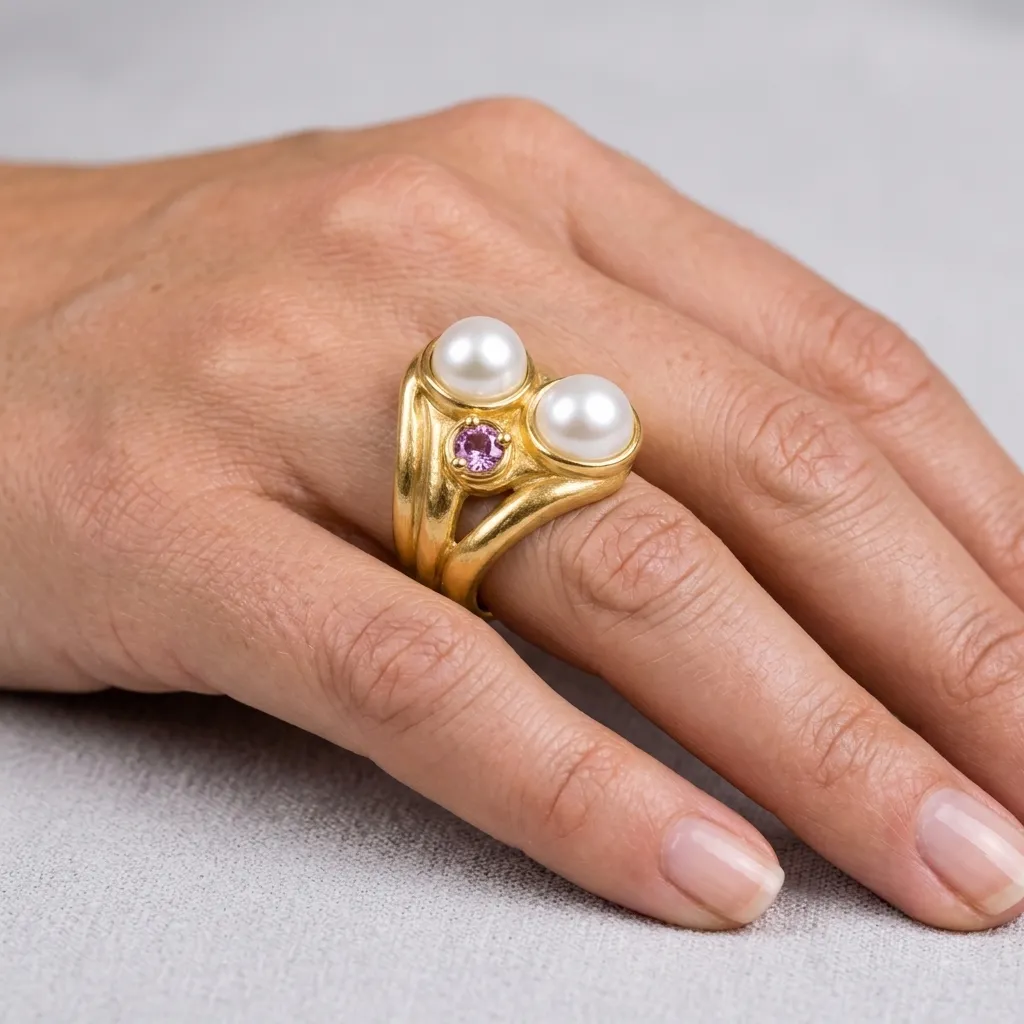
Akoya pearl rings put a small, round saltwater pearl on the hand, where its sharp, almost reflective surface catches light at every move. The pearls are cultured: a farmer seeds the oyster and the nacre builds up around that nucleus. On a ring the grade shows quickly, since the pearl sits right under the eye: the higher grades keep a cleaner skin and a deeper shine, the lower ones a few small marks seen up close.
Tahitian pearls come from a larger oyster and run dark, from grey to green and peacock tones; akoya stays smaller and mostly white with a rose or silver overtone. Mikimoto is a jeweler rather than a kind of pearl, and much of what it sells is akoya, so the real comparison is grade, size and setting.
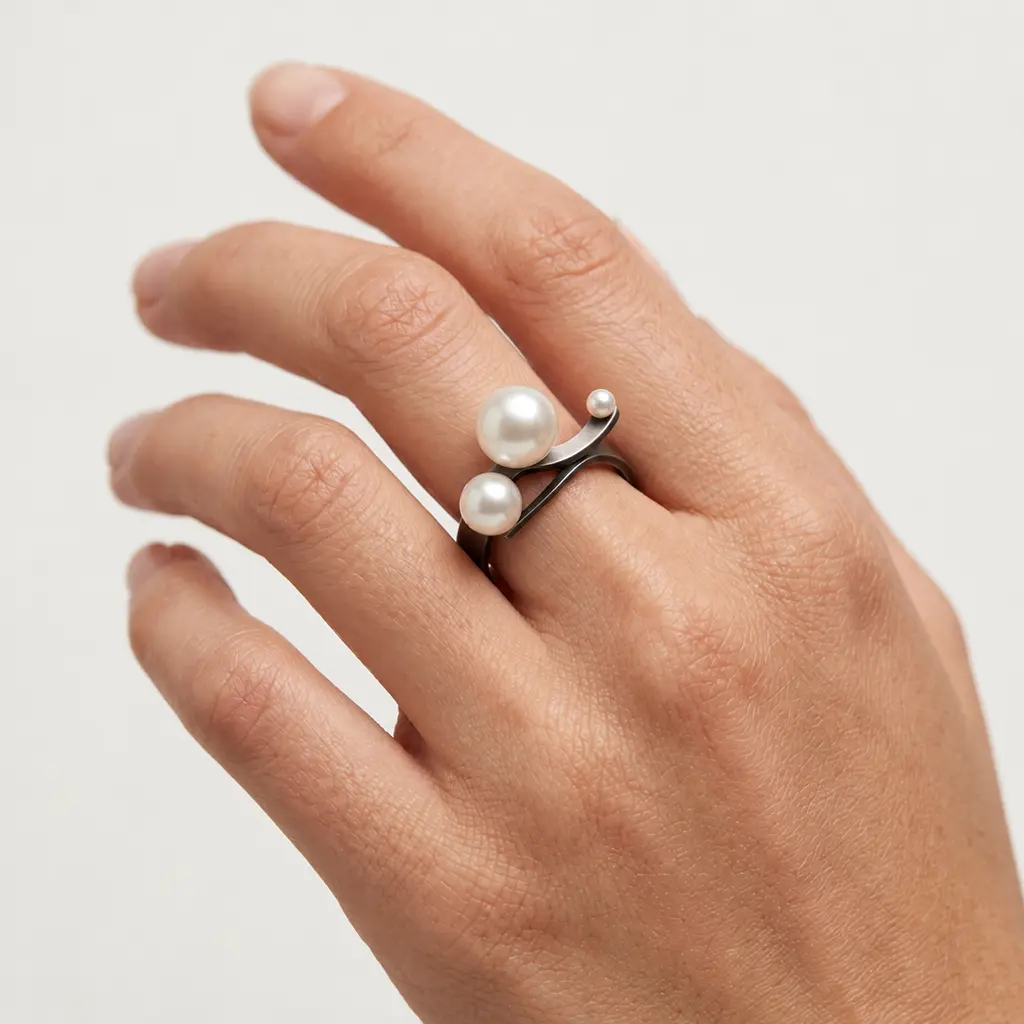
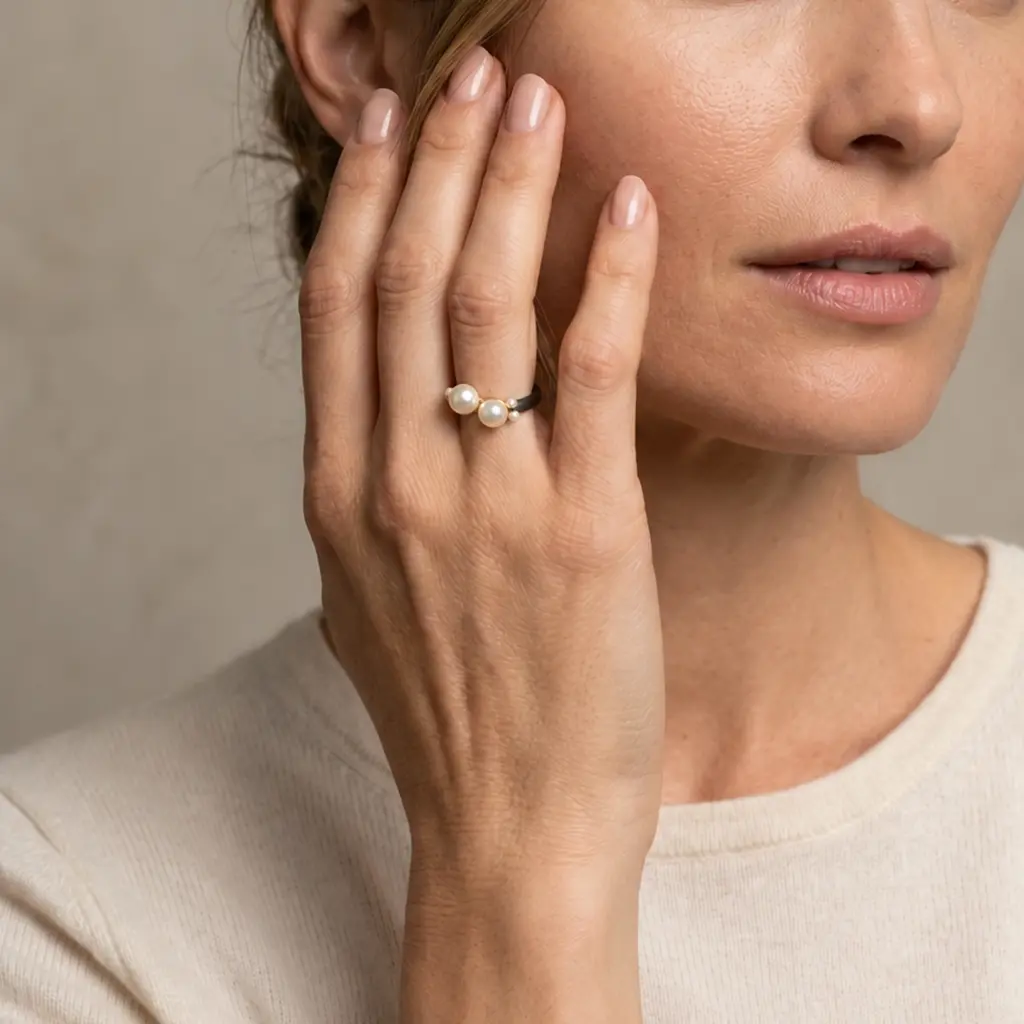
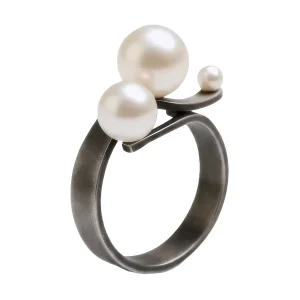
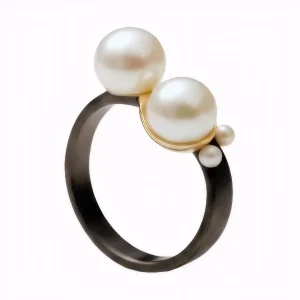
Metal changes how the pearl reads. Blackened silver and white gold make its white look cooler, as on a band of oxidized silver plated with black rhodium, where a gold-plated cradle holds the front pearl and two small pearls trail beside it. Warm gold softens it, for example a pearl resting in the dip of a wavy 14K rose gold band with natural blue topaz along both shoulders; more solid gold settings are among our gold rings, and rings with other kinds of pearl under pearl rings.
A ring takes more knocks than a necklace, and nacre is soft, somewhere between a fingernail and a copper coin in hardness. Take an akoya ring off to wash your hands, wipe it with a soft cloth and store it apart from harder stones; the pearl guide covers how pearls are graded.
We couldn’t find a match
Try a different stone or material — you’ll see results instantly.
Collections evolve — new combinations appear regularly.
You may also like
Explore close matches — same category, different stone/material.
-
 Select US sizeQuick add This product has multiple variants. The options may be chosen on the product page
-
 Select US sizeQuick add This product has multiple variants. The options may be chosen on the product page
-
 Select US sizeQuick add This product has multiple variants. The options may be chosen on the product page
-
 Select US sizeQuick add This product has multiple variants. The options may be chosen on the product page
-
 Select US sizeQuick add This product has multiple variants. The options may be chosen on the product page