

Halo Pendants
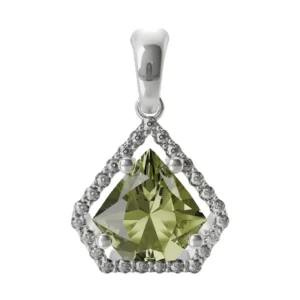
A halo pendant sets one center stone inside a ring of smaller stones, so the center reads larger and throws more light than it would alone. The ring varies, in pieces such as a pear-cut stone sunk into domed natural zircon pavé that wraps over the sides, an emerald cut inside a single row of zircons, or a pentagon traced by a thin zircon frame with open space between the two.
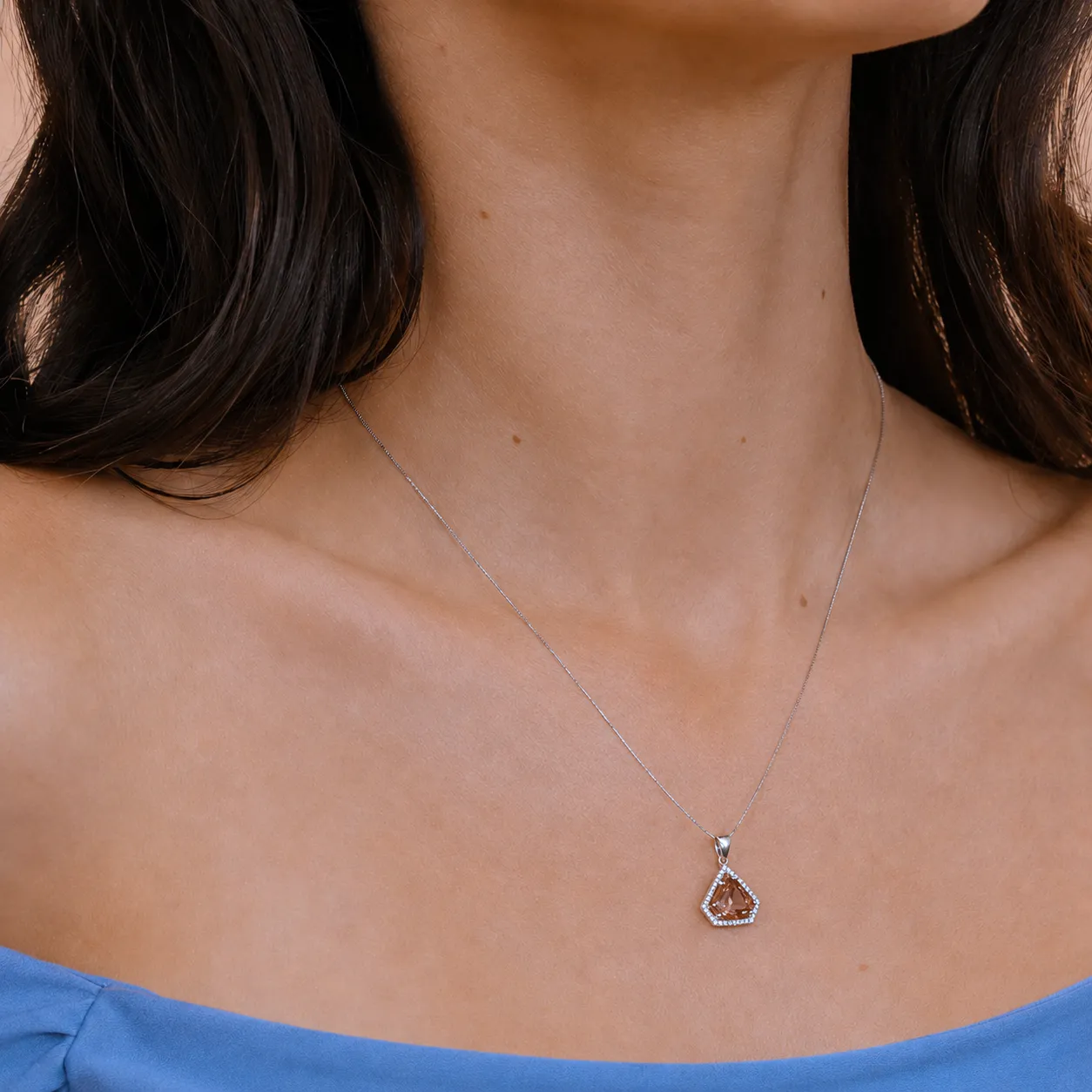
The halo matters most when the center changes color. Around a lab-grown zultanite center the colorless border stays white in any light, so the shift is easy to see, from olive green by a window to cognac or rosy brown under an evening lamp. Zultanite pieces for the neck with other settings are on zultanite necklaces and pendants.
Most halo pendants on the market are diamonds in gold. Pendants like these keep the same construction in rhodium-plated 925 sterling silver, and the small stones are mined zircon rather than cubic zirconia. Rhodium gives the silver a cool white that matches the zircons and slows tarnish. Lotion and soap settle between small zircons and dull them, so brush the back of the setting now and then with a soft toothbrush and warm water.
Each pendant is sold without a chain. To wear it as a halo pendant necklace, hang it on a fine chain you already own; at a few grams it will not drag a thin chain. The halo is a standard construction, and pendants like these also sit among our classic necklaces and pendants.
We couldn’t find a match
Try a different stone or material — you’ll see results instantly.
Collections evolve — new combinations appear regularly.
You may also like
Explore close matches — same category, different stone/material.